The Rediscovery of Alexander Hamilton: From Obscurity to Broadway Fame
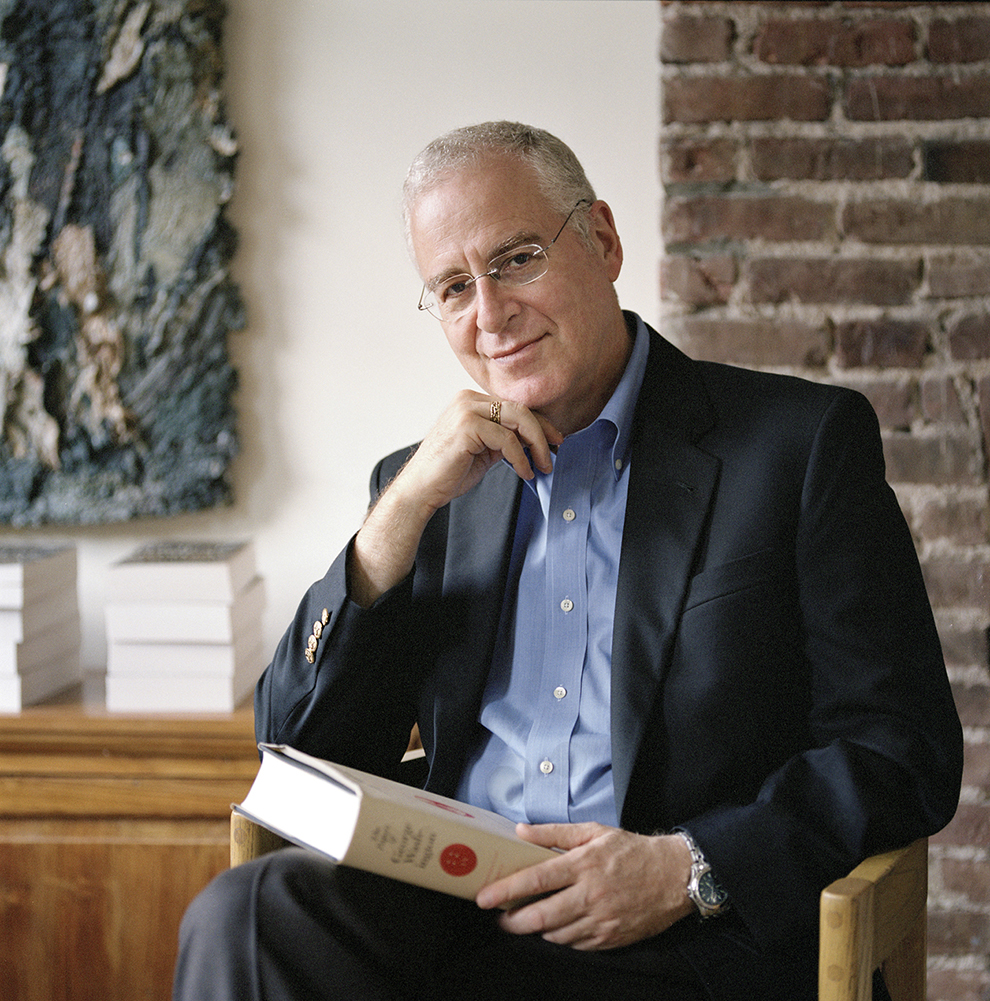
Having heard such great things about the musical, I decided to give it a watch and enjoyed it a great deal. I’ve always felt that, even if a few liberties are taken here and there, a piece of entertainment based on historical events is a success if it inspires viewers to go and research the details for themselves, and the Hamilton musical certainly got me interested in what went down when thirteen colonies decided they’d had enough of overbearing Mother England. By sheer chance, a few months later I was offered the chance to see the musical live when it played in London, and it was even better in person. The musical, written by Lin-Manuel Miranda, is based upon Ron Chernow’s 2004 biography of Hamilton, and the author even served as the show’s historical consultant. There were plenty of copies of the source material for sale after the show, and I’d like to tell you I picked up my copy there, but the truth is I’m far too poverty-stricken to pay £25 for a book, so I ended up buying a second-hand copy from eBay for a few pounds. Apologies to Mr. Chernow for the lack of royalties on that transaction, I hope my upcoming praise for your excellent biography is some compensation.
Uncovering the True Story of Alexander Hamilton: Beyond the Broadway Musical
My interest in Hamilton, the Revolution, and his part in it was fueled primarily by one very simple question; who the hell was this guy? How did a penniless immigrant with no power, connections, money or titles pull himself out of squalor and become a key player in the founding of the United States? The musical gives a partial answer, but I wanted the whole picture, and for that I needed to dive into Chernow’s 818-page biography of America’s forgotten father. If you’re a particular fan of the musical then I’m afraid I’ve got some bad news, the biography includes very little rapping (none, in fact) and the main cast of characters is a bunch of privileged white guys who are somehow able to genuinely extol the virtues of freedom and equality for all, while also owning, buying, and selling slaves. As much as I enjoy the musical and its excellent score, it can be easy to forget that the events it’s based upon didn’t unfold with the same sheen and polish provided by some good acoustics and lighting. Like most events in history, the true story is far less cut and dry, far more morally gray, and the key players far less easy to characterise.
The Unsung Heroine of Hamilton’s Legacy: The Life and Legacy of Eliza Hamilton
Surprisingly, Hamilton begins long after the end, opening on the final years of Hamilton’s widow, Eliza, who amazingly survived her husband by over half a century, eventually dying in 1854 at the age of 97, just a few years before the American Civil War. Having suffered numerous tragedies both before and after the death of her husband, Eliza’s spirit never wavered, and in the decades following Hamilton’s death, Eliza devoted her life to philanthropic pursuits, despite being left in debt and poverty. She helped found the Orphan Asylum Sanctuary, a role which saw her oversee the needs and education of over 700 children, and the organisation still runs to this day under the name of Graham Windham. When she wasn’t raising help for the needy, Eliza was fiercely defending her husband’s reputation from criticisms directed at him after his death, namely by the political enemies and rivals, most of whom survived him. In particular, she campaigned for an apology from James Monroe, the fifth President of the United States, for his accusations about Hamilton’s supposed financial misconduct, an apology she eventually got when the two met shortly before his death. She kept Hamilton’s memory alive, sorting through his countless writings and even into her nineties she persistently petitioned congress to buy and publish her late husband’s works, a petition that was eventually granted. She continued her charity work, continued breathing life into the flame of her husband’s legacy, showing interested visitors to her house the many artefacts she still owned, including a bust of her husband’s likeness, and a silver wine cooler that had been gifted to her husband from non-other than George Washington himself. The more I learn about history, the more I come to appreciate the saying, “Behind every great man is an even greater woman.” This is undoubtedly true for Hamilton, and I firmly believe Eliza is equally worthy of the praise and fame her husband has enjoyed in recent years.
The turbulent childhood and early life of Alexander Hamilton, shaped by abandonment, tragedy, and a fierce determination to succeed
Our story begins proper with the story of Hamilton’s mother, Rachel Faucette who, estranged from her husband, bore young Alexander to James Hamilton, the fourth son of a laird in Ayrshire, Scotland, who had travelled to the remote Caribbean island of Nevis to seek his fortune and make a name for himself. The exact year of Hamilton’s birth is difficult to be certain of, perhaps even to himself, but historians generally agree the Founding Father was born in 1755, in the Nevis capitol of Charlestown. Within a few years, James Hamilton abandoned his wife and infant son, under the pretence he was sparing her the charge of bigamy, and thus the Hamilton’s relocated to the island of St. Croix. Shortly afterwards, Hamilton and his mother contracted Yellow Fever, which took the life of Rachel but spared her 13-year-old son. In the aftermath of her death, her husband appeared to seize her estate and auction it, leaving her young son with nothing save for some books a family friend had purchased and returned to the now orphaned Hamilton. The young boy was briefly taken in by his older cousin, though the respite was short-lived after the cousin took his own life, resulting in Hamilton once again being alone.
From Orphan to Hurricane: Hamilton’s Early Life and Education
Hamilton eventually found a home thanks to a local merchant (who some believe to have been his real father) and proved himself a capable trader. Despite his clear intellect, Hamilton’s education had been stymied by the fact he had not been allowed membership to the Church of England, and by extension it’s schools, because he was a bastard. While his mother was alive, Hamilton received tutoring from a Jewish headmistress who worked in a private school. In an early example of his industrialism, the young boy bolstered his formal education by reading the 34 books owned by his family. It soon became clear Hamilton excelled when it came to reading and writing, and it seemed the small island of St. Croix was far too small for him, though the chances of a penniless orphan with no contacts making it to the New World were slim at best. In 1772, Hamilton’s potential became undeniable when he detailed an account of a hurricane that had laid waste to his island home. Chernow describes the letter as sublime, “for all its bombastic excesses, it does seem wondrous [that a] self-educated clerk could write with such verve and gusto,” and is astounded that a teenage boy could produce such an apocalyptic “fire-and-brimstone sermon” presenting the hurricane as a “divine rebuke to human vanity and pomposity.” Tutor and mentor to Hamilton, the Presbyterian Reverend Hugh Knox, submitted the letter for publication in the Royal Danish-American Gazette, where it was soon read by the inhabitants of the island. So impressed were the community leaders, they took up a collection to have Hamilton sent to the colonies for a more thorough education.
The Legacy of Hamilton: Revolutionary War Hero, Visionary Statesman, and Prolific Writer
From here, Hamilton became friends with a certain Hercules Mulligan, who would play an essential part in the revolution, attended King’s College and here began to discover his patriotism for the colonies, rather than that of England. As the war began in earnest, Hamilton joined a militia, became a member of Washington’s personal staff, and eagerly awaited his opportunity to seize glory on the battlefield, a craving which caused no end of tension between himself and the general. This review is staring to read more like a biography, so I’ll ease off the details, but as you well know if you’ve seen the musical, Hamilton’s role in the Revolutionary War was only the beginning. After the war, Hamilton practised law, was elected a representative for New York, founded the Bank of New York to tackle his fledgling county’s crippling debt, penned 51 of the 85 Federalist Papers, established the Coast Guard, founded The New York Post, and, as the first secretary of the treasury under the Washington administration, set up a watertight financial system for the United States that even his most bitter rivals failed to find faults with. In his personal life, which he somehow managed to have time for, Hamilton argued against slavery (when it was convenient), was the target of his country’s first political scandal, wrote a staggering number of political essays under pseudonyms, maintained a long-standing feud with Thomas Jefferson, lost a son under tragic circumstances, and watched his daughter succumb to severe mental illness. By the time of his death at the hands of Aaron Burr in a duel that arguably damaged its winner more than its loser, Hamilton was between 47 and 49 years old. How he had managed to establish such a staggering list of accomplishments in less than 50 years is difficult to comprehend, and it’s a testament to his work ethic that it was a bullet which ended his life, rather than his overwhelming work load.
Any biographer attempting to publish a study of Hamilton’s life will quickly realise that such an undertaking is far more difficult than for most historical figures, especially those who were Hamilton’s peers. More so than the likes of Washington or Jefferson, Hamilton’s life requires any serious biographer to play the role of a detective, as well as a historian. Given his humble origins, his illegitimate status, and the poor records kept by his small island home, much of Hamilton’s early life is shrouded in secrecy. It’s not poor bookkeeping that prevents us from even being certain as to Hamilton’s date of birth, it’s also the fact that the man himself was so secretive about his early years that he almost never wrote of them openly, thus Chernow is forced to piece together scraps of evidence to make the clearest picture possible. Despite holding his origins as a closely guarded secret, Hamilton’s enemies still delighted in reminding the public of his bastard status, and even had the gall to question his loyalty to the country he had risked life and limb for, despite not being a natural citizen of the continent. Yet, when it comes to his professional life as a soldier, lawyer, statesman, and writer, Hamilton could not be more forthcoming, and one imagines Chernow inundated with sources, some of them directly from Hamilton, detailing his thoughts and actions on America’s future. While Hamilton may have been discreet to the extreme when it came to his birth, the opposite was true when it came to his beliefs. Hamilton was gifted in a multitude of ways, but discretion was not one of them, at least when it came to taking a stand. Those of you who tire of the non-answers given by every politician these days will revel in Hamilton’s inability to bite his tongue or bide his time. Outspoken and stubborn, our protagonist was never afraid to pin his cards to the mast for all to see, even when the course of action he fought for was controversial or unpopular. While his incapacity to edit himself caused no end of heat from his critics, his passion for fighting for what he believed in, whether it help or hinder his career, shows an integrity not often found in politicians. Thus, we have countless essays, letters, and speeches, many directly from Hamilton, with which we can chart his career.
It’s also worth noting that, despite his extramarital relations, and despite the fact he had direct access to a nation’s finances, not even those who resented him most could ever find a shred of evidence to suggest he ever abused his position for personal gain, and his detailed record keeping proves not a single cent ever went astray. Chernow’s portrait of his subject depicts a man who, for all his faults, would face down an opponent with a loaded pistol if it meant his reputation was at stake when it came to his honour as a statesman. I can believe many things about Hamilton, not all of them to his credit, but I cannot believe that he ever corrupted himself with backhanded deals, bribes, treason, or blackmail, much less that he ever used his access to vast sums of money to line his own pockets. If nothing else, the sorry state of his family’s finances following his death attest to that. Thanks primarily to his political enemies, who set about tarnishing his legacy in the years after his death, Hamilton became at best overlooked or, at worst, seen as the least of the Founding Fathers morally, politically, and socially, when it could be argued with some ease that the likes of John Adams, Thomas Jefferson, and James Madison were all more corrupt than Hamilton.
It would be easy for an 800+ page biography of a statesman to feel like a dull affair, especially when the revolution is over, and we’re left with petty rivalries, policies, and the everyday nitty-gritty that goes into a functioning government, but this is far from the case when it comes to Chernow’s book. Our author doesn’t simply tell us what Hamilton did, but he’s sure to include sources, many of which are letters written by Hamilton himself, which explain why he did the things he did, his frame of mind going in, and his hopes for the outcome. The reader begins to understand how Hamilton functioned, and it wasn’t long before I found myself predicting how the statesman would deal with each scenario that presented itself. Furthermore, even when Hamilton occasionally blunders, the insight afforded us by Chernow allows us to understand why he made such a move, even if we can see it’s the wrong one. In what could’ve been his greatest blunder, during a period of high tension with France, Hamilton urged his commander-in-chief, John Adams, to muster the army and march against colonies owned by France’s ally, Spain. Adams quickly overruled the overzealous general and, despite being well-known for his angry outbursts and tantrums, settled the issue with diplomacy rather than force. It would be understandable for those unfamiliar with Hamilton to see him as a warmonger, and indeed Adam’s solution turned out to be the better one, but those who’ve read to this point in Hamilton’s career will understand his approach as a man with significant experience in warfare, a man who has fought and bled for his country, a man who was a soldier before he became a statesman. Chernow has also gone into enough detail when it comes to the supporting cast that readers understand Adams saw no military action during the war, and served instead as a diplomat, sent to Europe to seek aid from those who might support the colonies. Thus, we can see how these two men would take such different approaches to the same problem.
Chernow’s portrayal of Hamilton’s career makes it clear that the petty rivalry and infighting we see in politicians today is far from new, and took root almost as soon as the revolutionaries no longer had a common enemy to unite against. Once former friends with noble ideals in mind, it wasn’t long before the founding father had divided into two factions (sound familiar?) and were using any means necessary to undermine their rivals. In particular, Hamilton and Jefferson went from friends to heated rivals who published countless attacks on one another’s political schemes. Indeed, he may never have challenged him, but Jefferson arguably had more reason to duel Hamilton than Burr. It reflects poorly on human nature that the moment the threat of annihilation from the largest empire the world had ever known disappeared, the Founding Fathers almost immediately began to turn on one another. Given that Hamilton relished his position in Washington’s administration, and the fact that he never showed any sign of wanting to retire from public office, it’s staggering to see how thin-skinned Hamilton was when it came to his critics. Being almost as famous in the public consciousness as Washington, but lacking the almost sacred reputation of America’s first POTUS, Hamilton somewhat unfairly faced the brunt of his administration’s criticism. In Hamilton’s defence, much of the slander was just that, and he faced any number of accusations, including one ludicrous claim that he was secretly a British spy sent to bring the colonies back into British hands. Hamilton’s reluctance to ostracise and punish colonials who remained loyal to the Crown, and his belief that establishing good trade with an economic superpower might be in the States’ best interests, was apparently reason enough to accuse him of wanting to destroy the country he’d just faced down canon fire for a few years earlier. Perhaps because of his humble origins, Hamilton was highly sensitive to any slight against his integrity, whether real or not, and he spent many long evenings scribbling out furious replies to publications which had slandered him. This drive to defend his integrity as a statesman is what eventually drove him to not only admit to, but publicly detail, his affair with Maria Reynolds. There was nothing Hamilton wouldn’t do to clear himself of any professional wrongdoing, even if it meant revealing his private indiscretions.
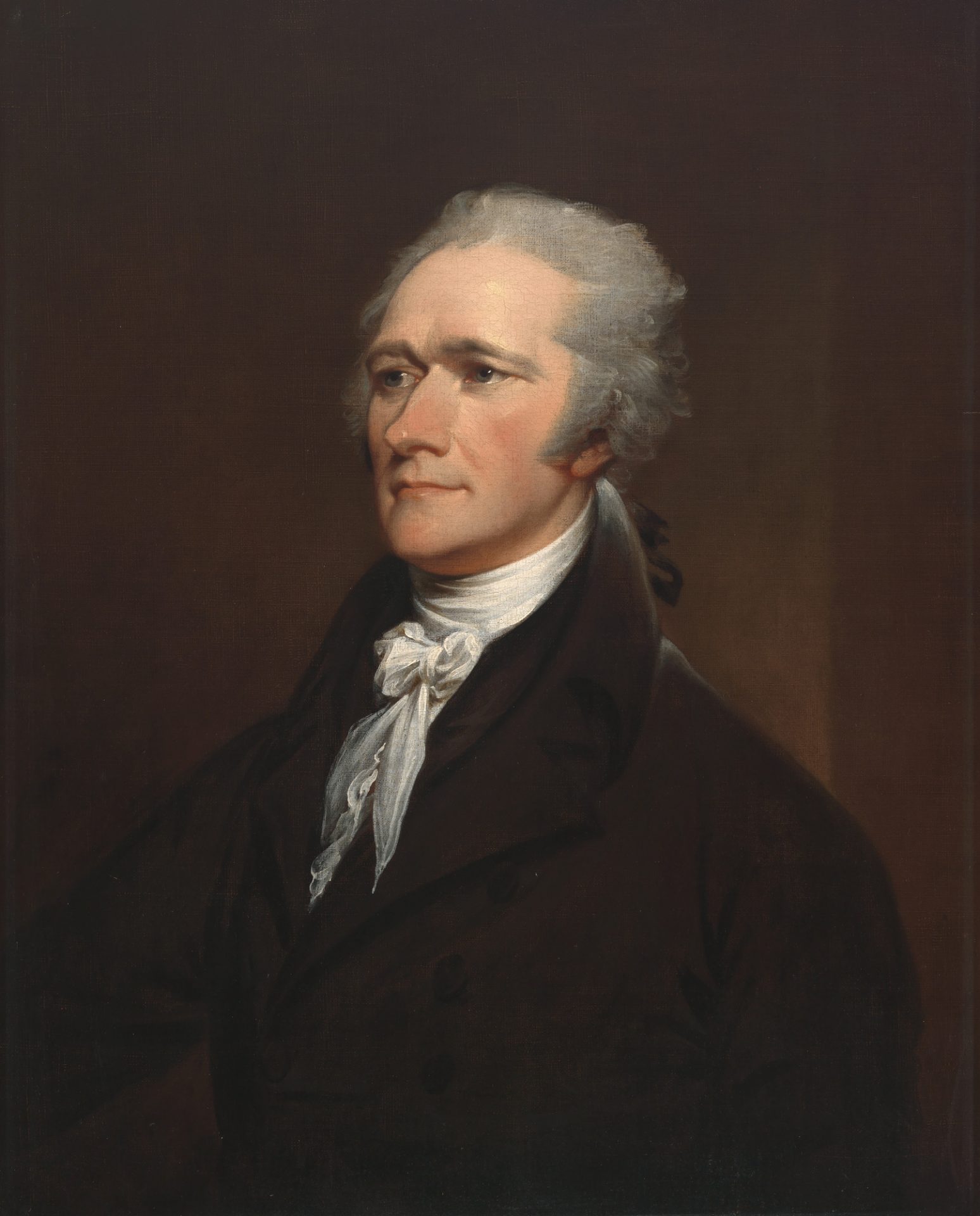
Given that many of the Founding Fathers lived to an old age even by today’s standards (Adams reached 90!) there’s no telling how much more Hamilton could’ve done with a few more decades in politics. That said, by the time he accepts the fateful duel laid down by Burr, it’s clear that his glory days are done. No longer a young man, decades of tireless work and the weight of his personal losses were starting to show. Hamilton’s letter had taken a darker tone towards the end of his life, and the depression he’d managed in his younger days was becoming more apparent. Most of Hamilton’s portraits depict a spry, upright young man, eyes wide and alight with passion, a slight, confident smile playing upon his lips, as though he’s privy to a joke the rest of us aren’t in on. Hamilton’s final portrait, finished after his death, shows a middle-aged man with almost watery eyes staring off into the distance. While still upright and proud, his hair’s now grey and receding, his brows are furrowed, and thin lips indicate a man trying to stymie a pain that won’t go away. Totally shunned by the Jefferson administration, and little loved by Adams’, it’s unlikely Hamilton would ever enjoy quite the power and popularity he wielded as the now deceased Washington’s right-hand man. With his prospects dim and his life marred by tragedy, one could speculate that Hamilton’s duel with Burr was a form of suicide. Much evidence indicates Hamilton intended not to return fire at Burr, but as Chernow is keen to point out, there is no strong evidence to indicate Hamilton was suicidal. He had had a family he clearly adored, debts to be settled, a number of writing projects in the works, and his decision to ‘throw away’ his shot against Burr fell in line with duel etiquette of the time and was regarded as an honourable way to end the duel without bloodshed but with one’s reputation intact. It was the same move he’d advised his son deploy in the duel that claimed his life. We may never truly understand Hamilton’s frame of mind as he drew pistols with Burr, but we can be certain that had his life not been cut short, we would no doubt have an even greater wealth of essays, letters, and books from one A. Ham. His glory days may have been over, but there’s no reason to believe anyone with a mind like his would’ve been content to let the great American experiment roll on without him.
The killing of Hamilton quickly became the greatest blunder of Burr’s life, and the Vice President’s already floundering career nosedived. Legal issues relating to the duel dogged him (though he was never prosecuted) and he soon became a pariah in the political scene. Never showing any regret for the death of his former friend, Burr led a wandering life full of further scandal. In his twilight years, married a wealthy widow, who later divorced him for squandering her money. She chose Alexander Hamilton Jr. as her divorce lawyer and the same year, Burr suffered a debilitating stroke and died a few years later, aged 80.
Almost immediately after his debt, Hamilton’s political rivals began downplaying his contributions towards the Revolution and the building blocks he implemented in the founding of the United States. Despite this, it’s a testament to Hamilton’s brilliance that, despite their best efforts, his detractors never found fault with his systems, and therefore never dismantled them. Despite being the most vocal critic of Hamilton’s financial institutions, Jefferson never found reason to abolish them. As a man who had utterly dominated America’s political scene in his own lifetime, his memory seemed easy for the world to forget, at least when compared to the likes of Washington, Franklin, and Jefferson. For a man who played such a pivotal role in the country’s birth, it’s astounding how close Hamilton came to being forgotten by the history books. Indeed, when he was remembered, it was usually in a negative light, as a hindrance to greats like Adams and Jefferson. It wasn’t until the Progressive Era of American politics, that Hamilton’s reputation began to recover, with Theodore Roosevelt praising the man for his leadership and strong government.
Like Chernow’s biography, we began with Hamilton’s widow, Eliza, and it’s only right we finish this review with her. While Hamilton’s memory had few friends in the years following his death, his wife, despite all the pains he’d caused her as well as the debts he left her in, never stopped championing her husband’s legacy and it’s thanks to her tireless efforts in sorting her husband’s writings that we know as much about his life as we do. Never one to dwell on her own sorrows, Eliza threw herself into work which helped those less fortunate than her, and she’s widely regarded as one of America’s first philanthropists and now appears in the philanthropy section of the National Museum of American History. Her sorting of Hamilton’s letters allowed her son, John Church Hamilton, to publish History of the Republic of the United States America, as Traced in the Writings of Alexander Hamilton and his Contemporaries, which not only detailed the founding of the US, but also set a very high bar for Chernow when it came to writing his own biography of John’s father. Until she died, Eliza wore a small package around her neck containing lines of a sonnet Hamilton had written for her. In her final years, Eliza struggled with short-term memory loss, but could still recall her life with Hamilton with great detail. After half a century without her husband, Eliza finally passed and was laid to rest next to him. As much as we have to thank Chernow for his incredible biography, and the musical for giving his legacy such as boost, it is ultimately Eliza to whom we owe the most gratitude, for without her our memory of Hamilton and his contributions would be lost. In his final letter to Eliza prior to his duel, Hamilton signs off “Adieu, best of wives and best of Women.” I think Hamilton would be most satisfied to know that Chernow made it clear to all readers that Eliza was worthy of this title.
Read More:
- Catch-22 – Joseph Heller Review
- Acid for the Children – Michael ‘Flea’ Balzary Review
- Gates of Fire – Steven Pressfield Review
- Norwegian Wood – Haruki Murakami Review